University project
BJT Audio Power Amplifier
Discrete stages, thermal behaviour and the move from simulation to sound.
Experience In Practice
Skills Applied
Technical Skills
Soft Skills
Build The Amplifier In Stages
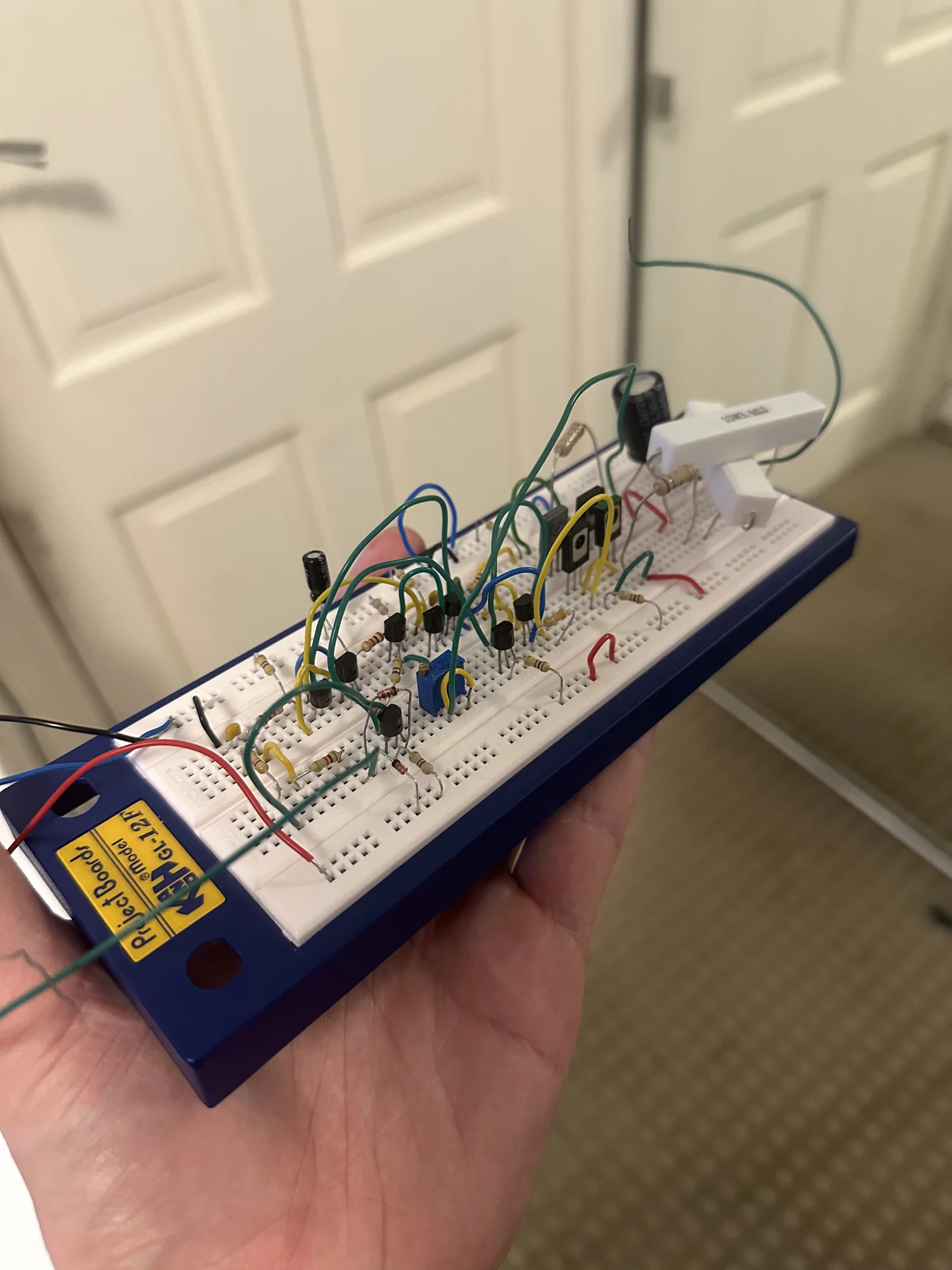
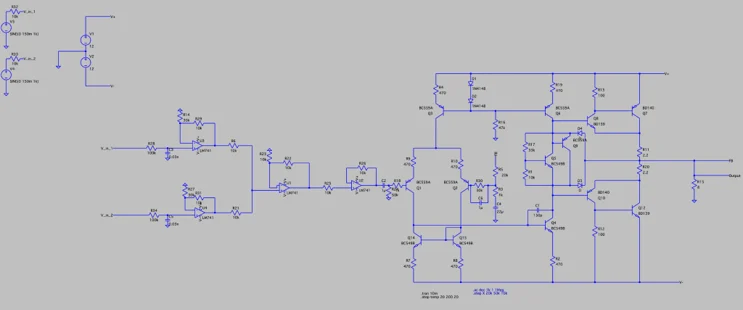
In the two-person audio-amplifier project, I was responsible for the differential input stage, voltage-amplification stage and thermal coupling. The complete Class AB design combined those blocks with input mixing and an output current stage.
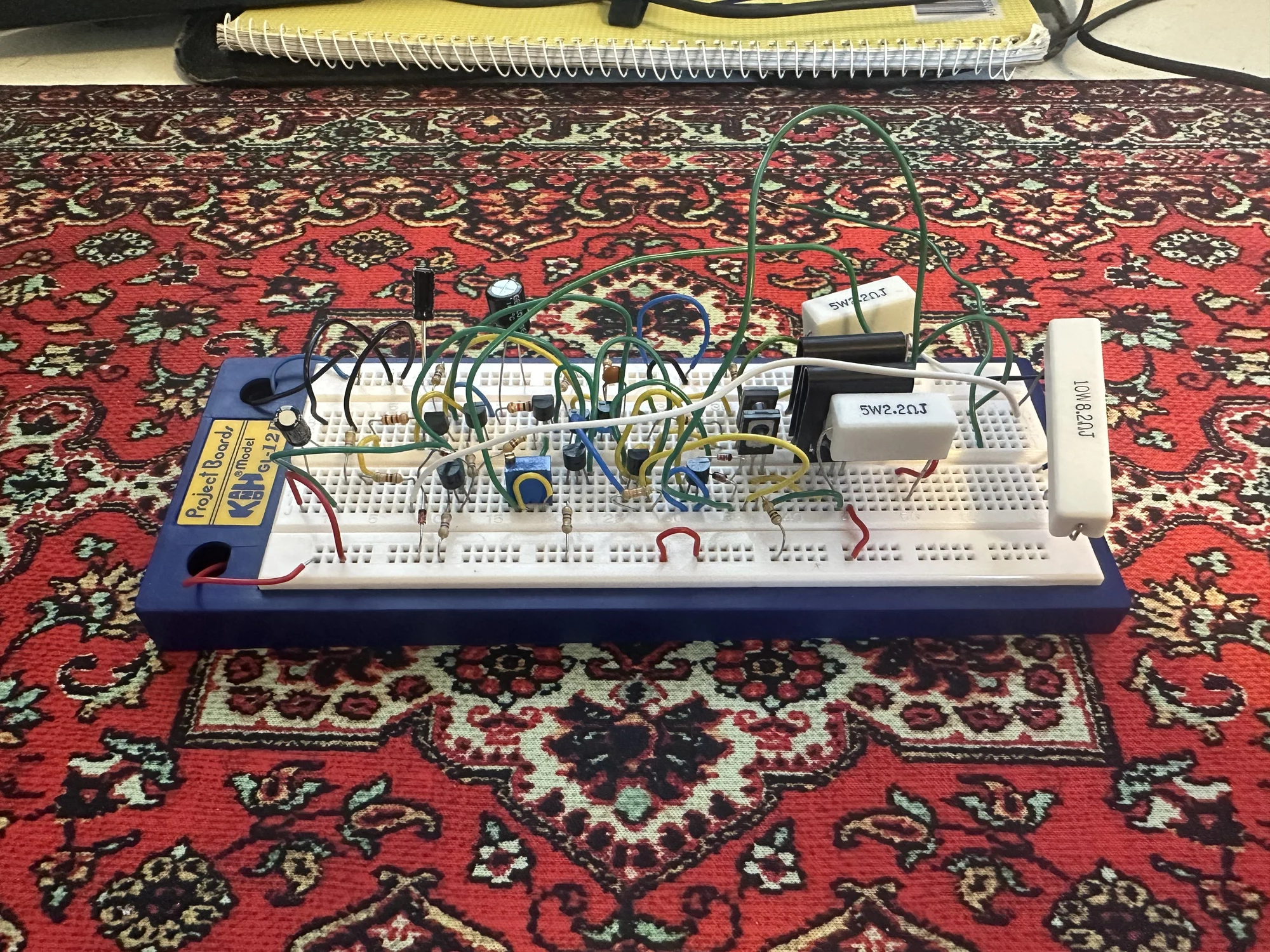
Bring The Circuit Onto The Bench
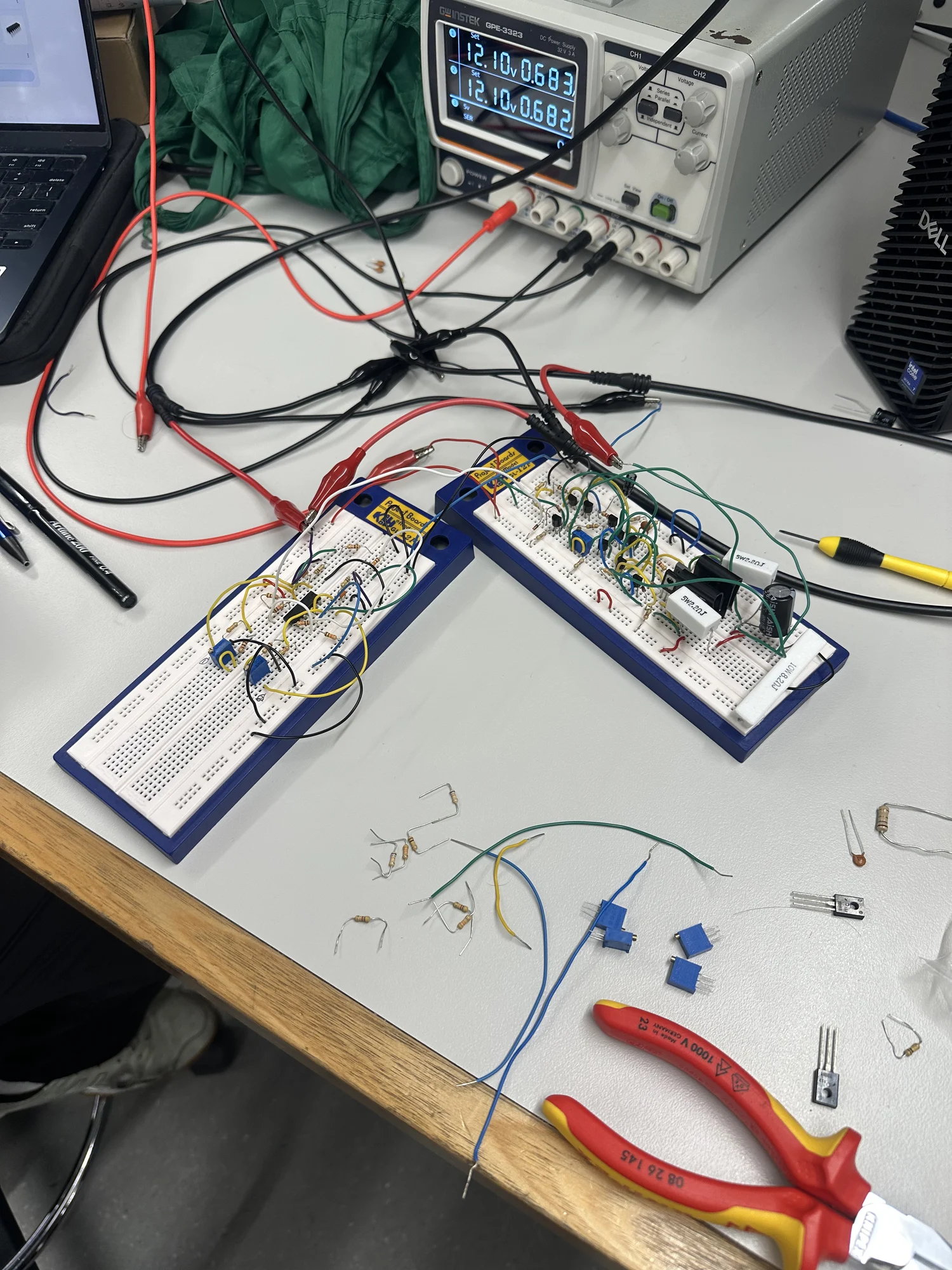
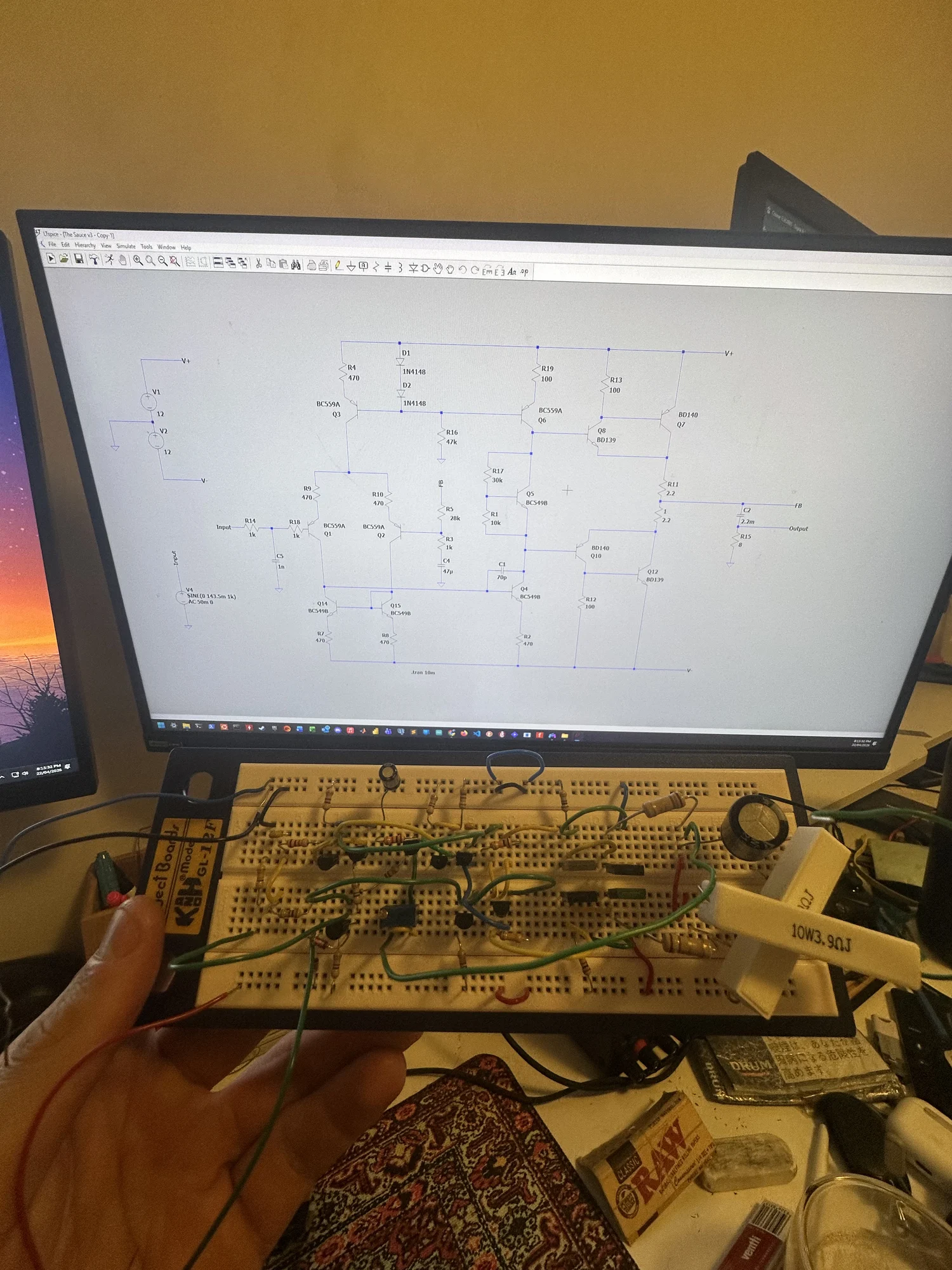
Simulation established biasing and expected behaviour before construction. The practical build then required diagnosing wiring, damaged components, heat and tuning across the connected stages.
Test The Assembled System
The report records audible playback and a harmonic-analysis estimate of 0.216% THD under its test conditions. Residual noise and limited tuning time remained part of the evaluation; this is a laboratory observation rather than a guaranteed amplifier specification.
The Engineering Journey
Analyse
Connect the input, voltage-gain and current-output stages.
Construct
Translate the simulated design into the physical circuit.
Evaluate
Investigate thermal behaviour, playback and harmonic content.
What This Experience Achieved
The result
A working audio-amplifier prototype, with documented stage responsibilities and measured harmonic content under the laboratory test conditions.