Hardware design
Sync Sound · Shared Wireless Audio
Building a shared-audio earphone concept, from power and PCB design to playback and onward transmission.
Experience In Practice
Skills Applied
Technical Skills
Soft Skills
Listen Locally And Share The Audio
The daisy-chaining concept lets an audio device play a stream for its own listener while passing audio on to another device. That brings wireless reception, buffering, audio conversion and onward transmission into one embedded system.
The device design combines battery charging and regulation, a microcontroller, an audio-processing stage and a custom PCB. My contribution covered detailed subsystem design, software operation and performance analysis.
STM32WBA63 & Bluetooth LE Audio
The intended earphone direction is an STM32WBA63-based implementation using Bluetooth LE Audio for synchronised audio sharing. The goal is to integrate local playback and redistribution in a compact, battery-powered device.
This is the proposed next implementation. It would bring the MCU, wireless transport and synchronisation together while retaining the power and audio-conversion architecture developed through the original prototype.
Connect Power, Data And Audio
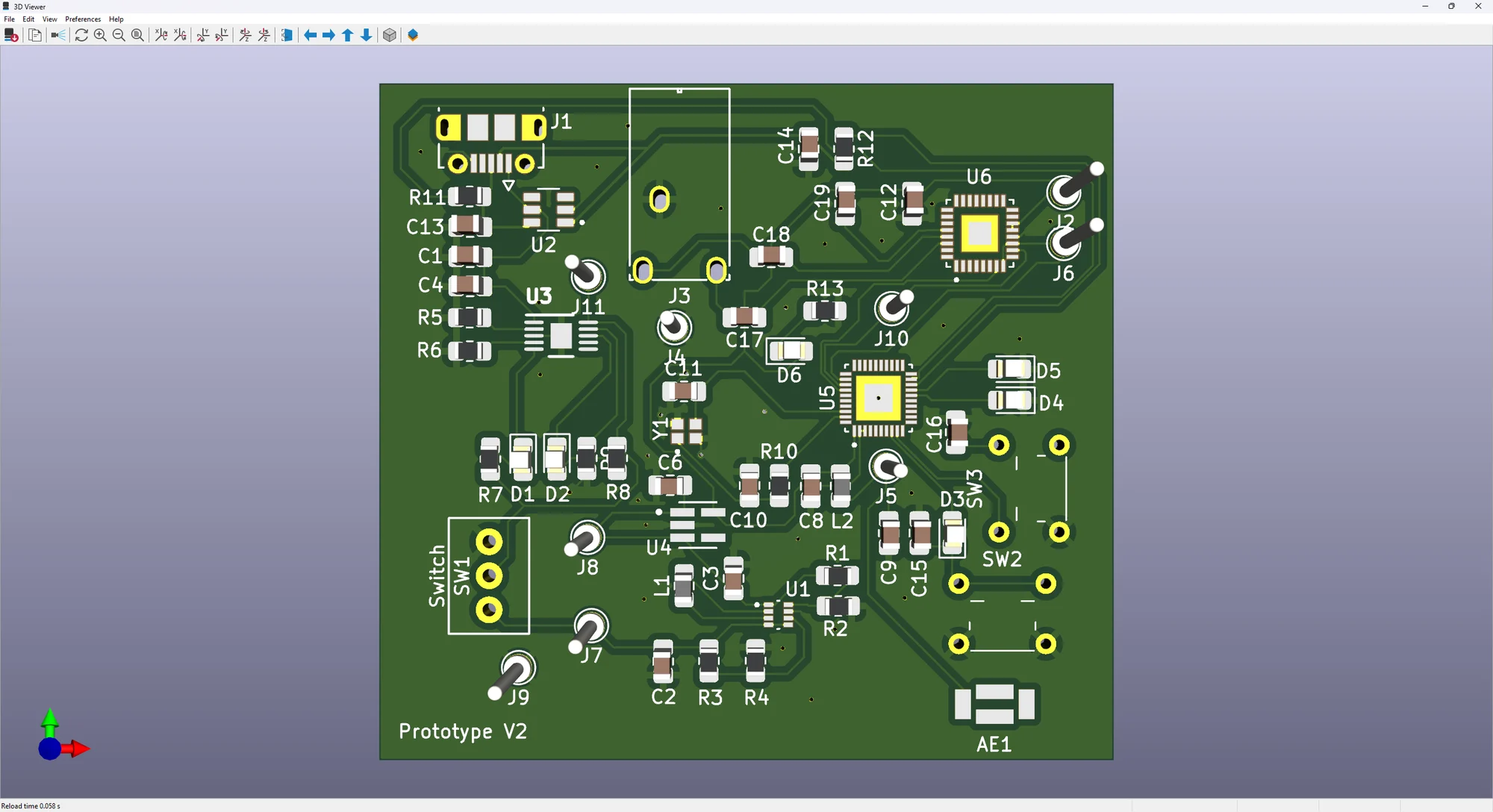
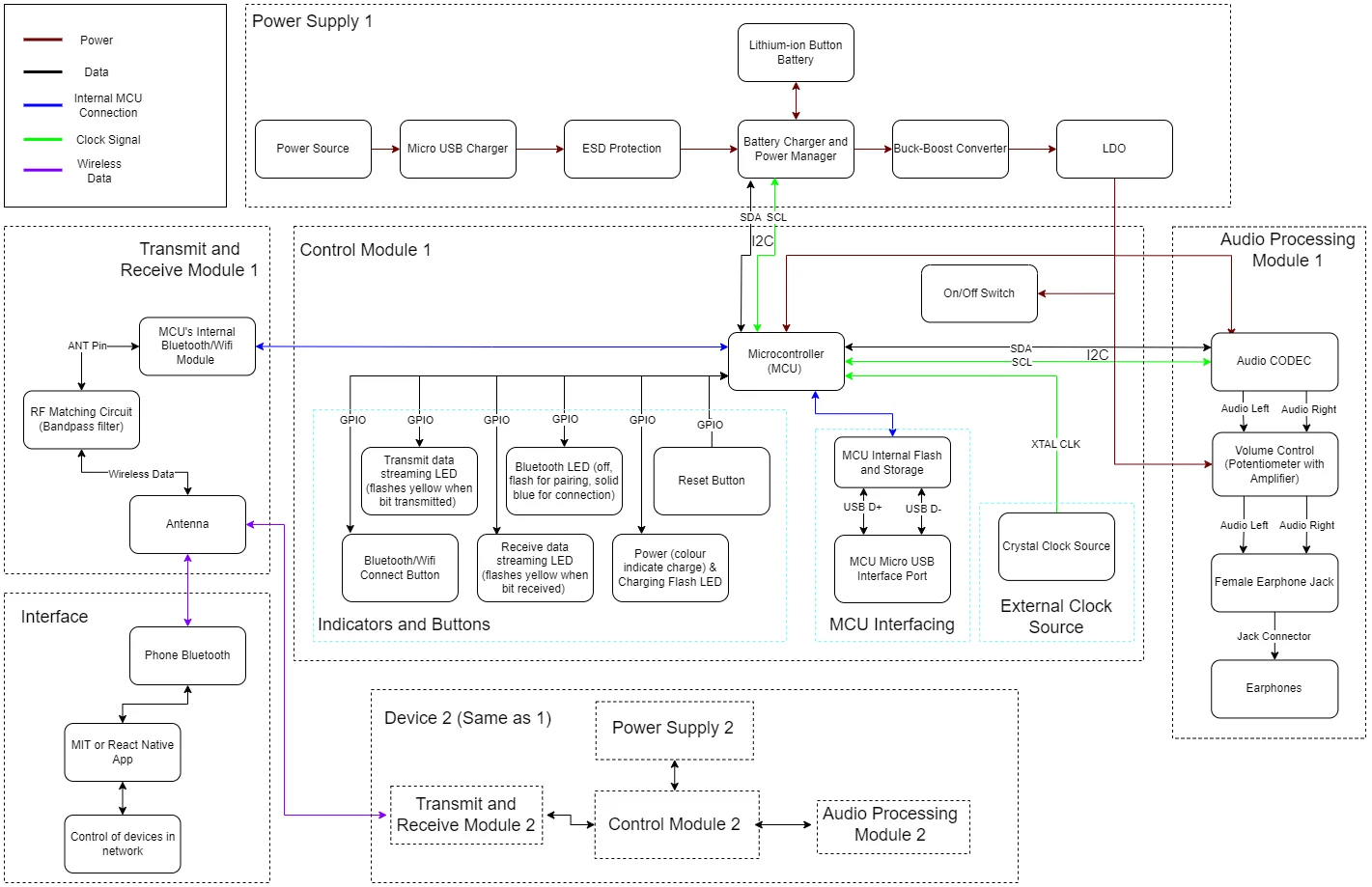
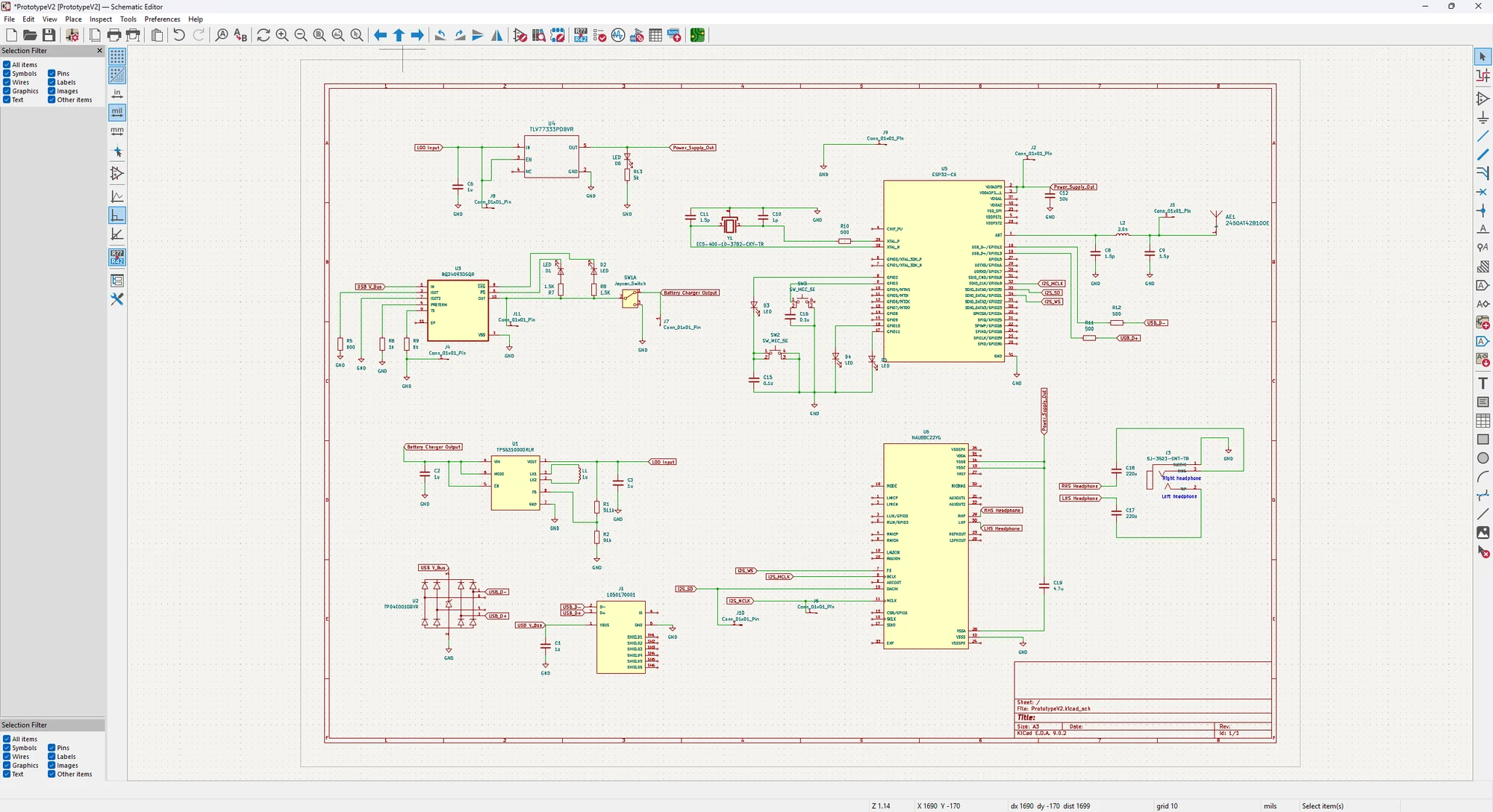
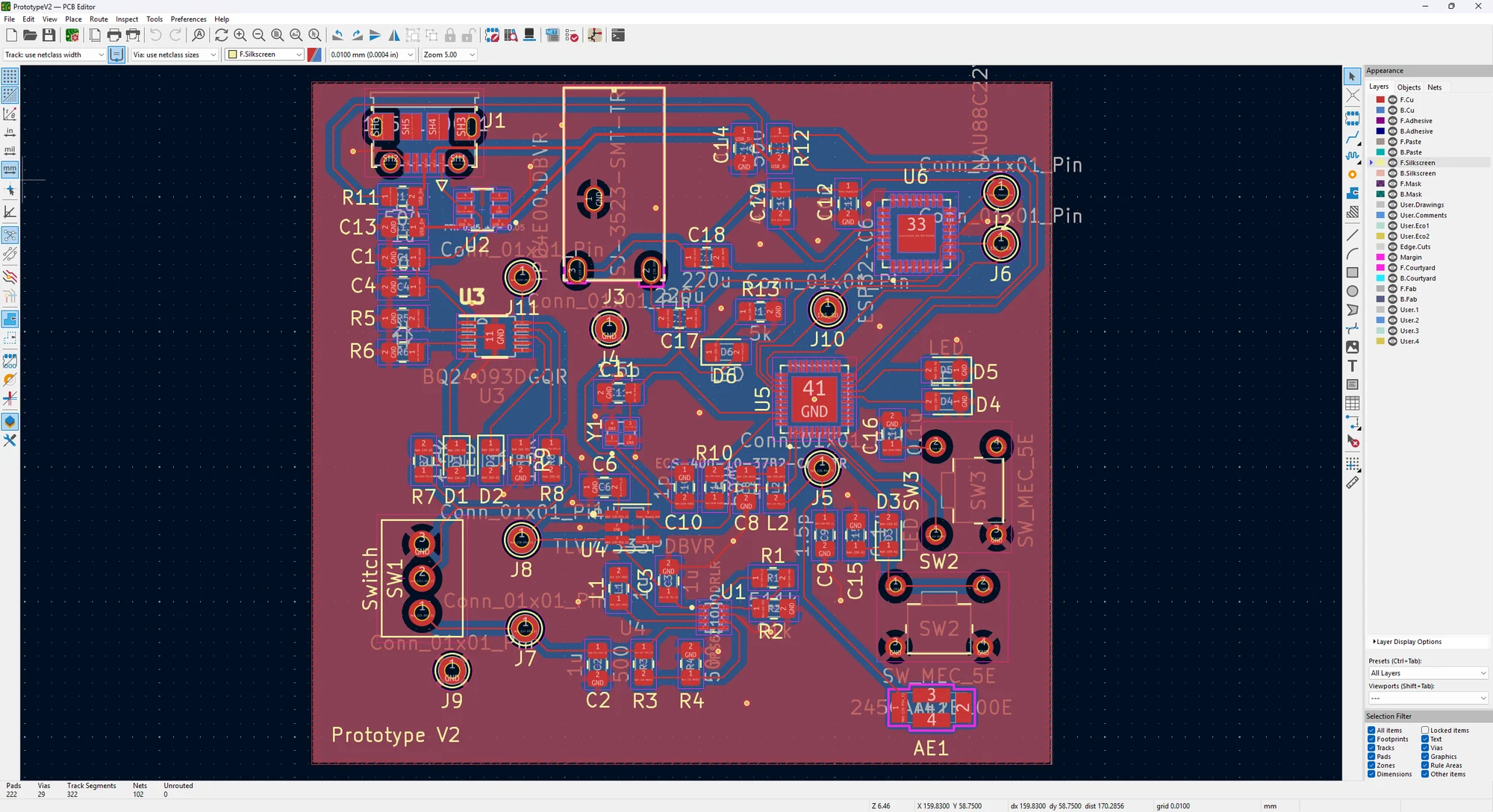
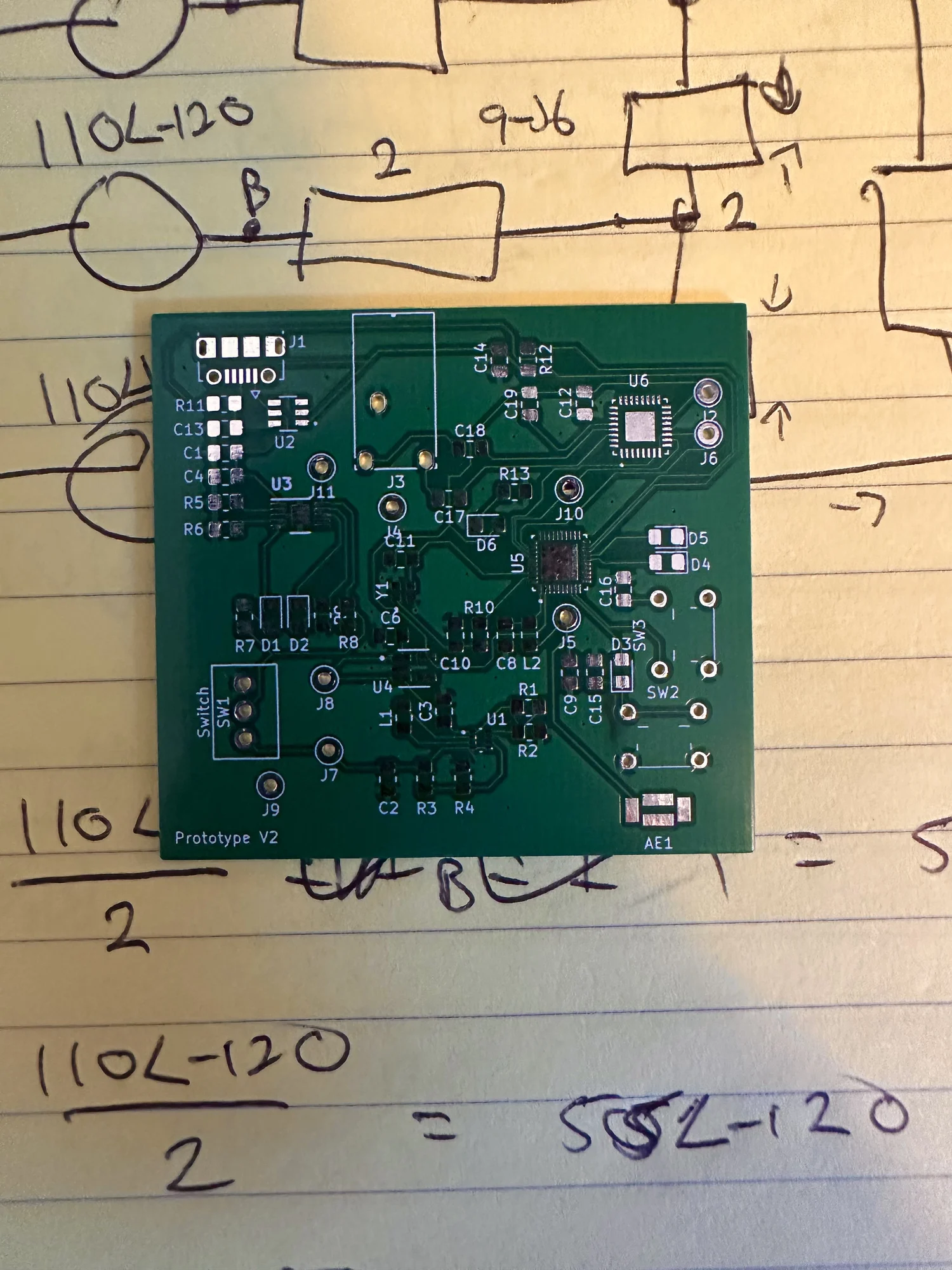
The custom board brings battery management, regulated supplies, control electronics and audio conversion together. The prototype received a laptop-side Python audio stream, buffered and decoded it, and sent audio over I2S for playback while forwarding data to another device.
Receiving, playing and forwarding the same stream creates practical timing constraints. Buffers need enough margin to avoid dropouts, while added buffering increases the delay between the source and listener.
Keep The Signal Path Testable
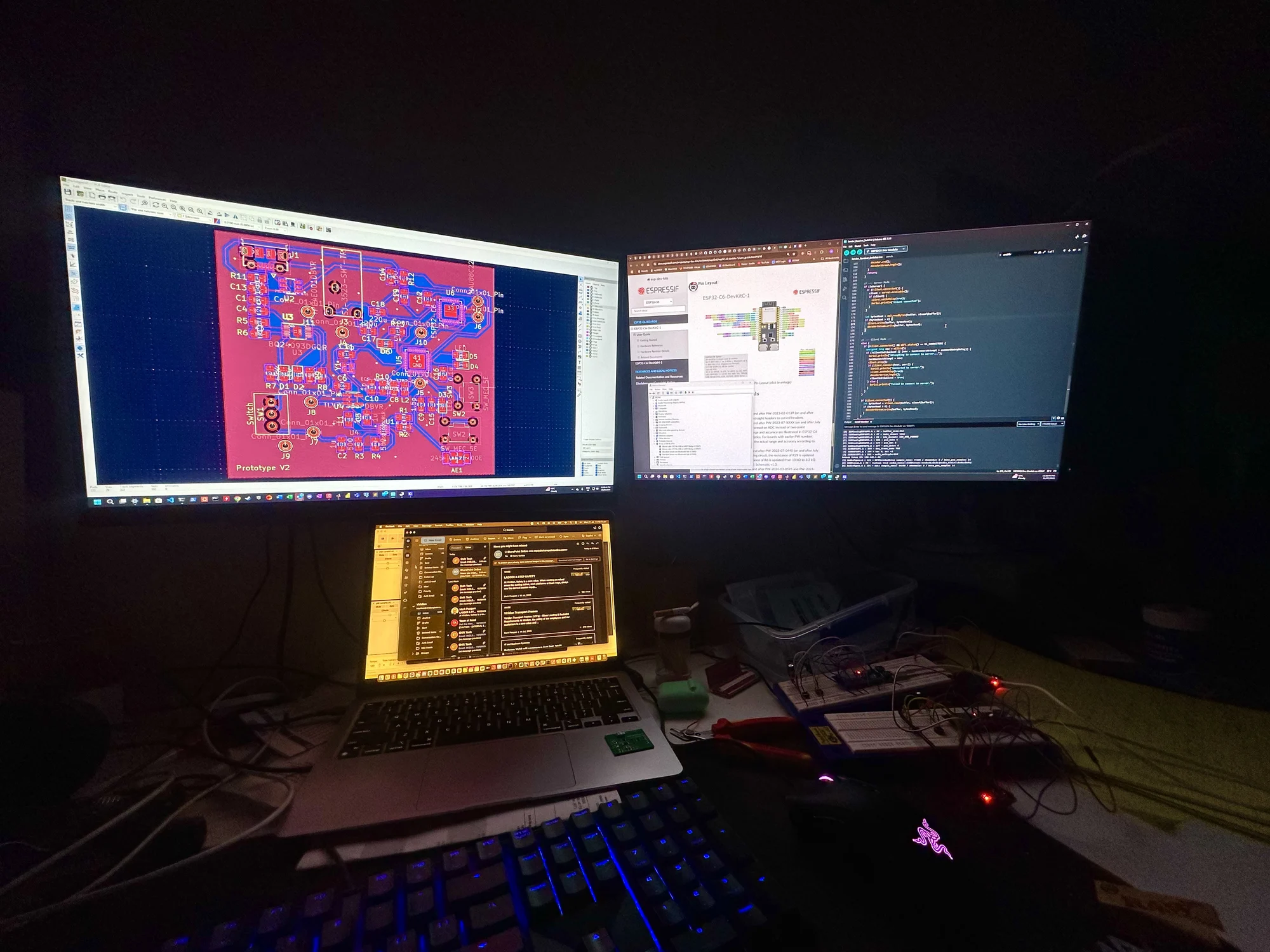
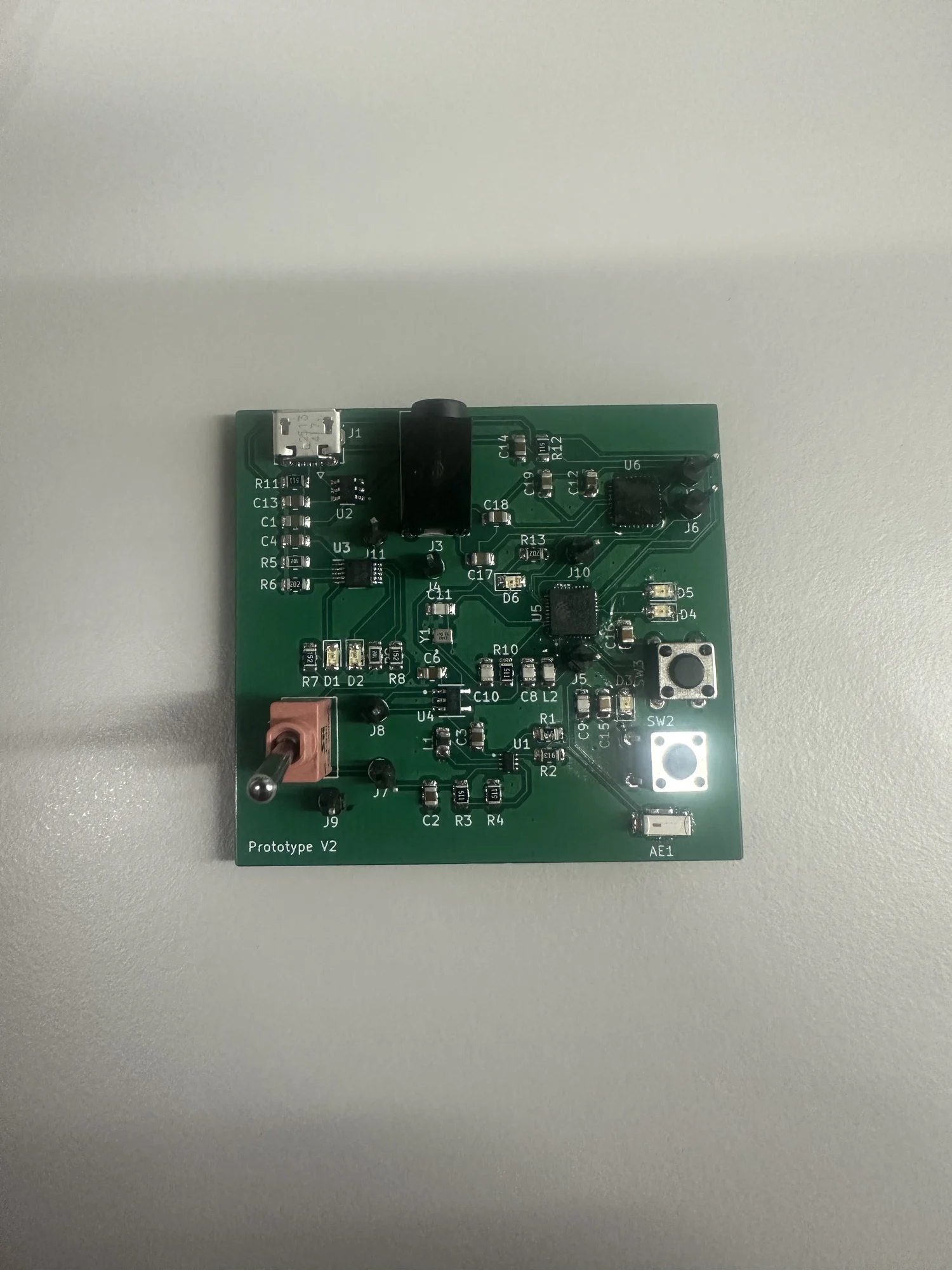
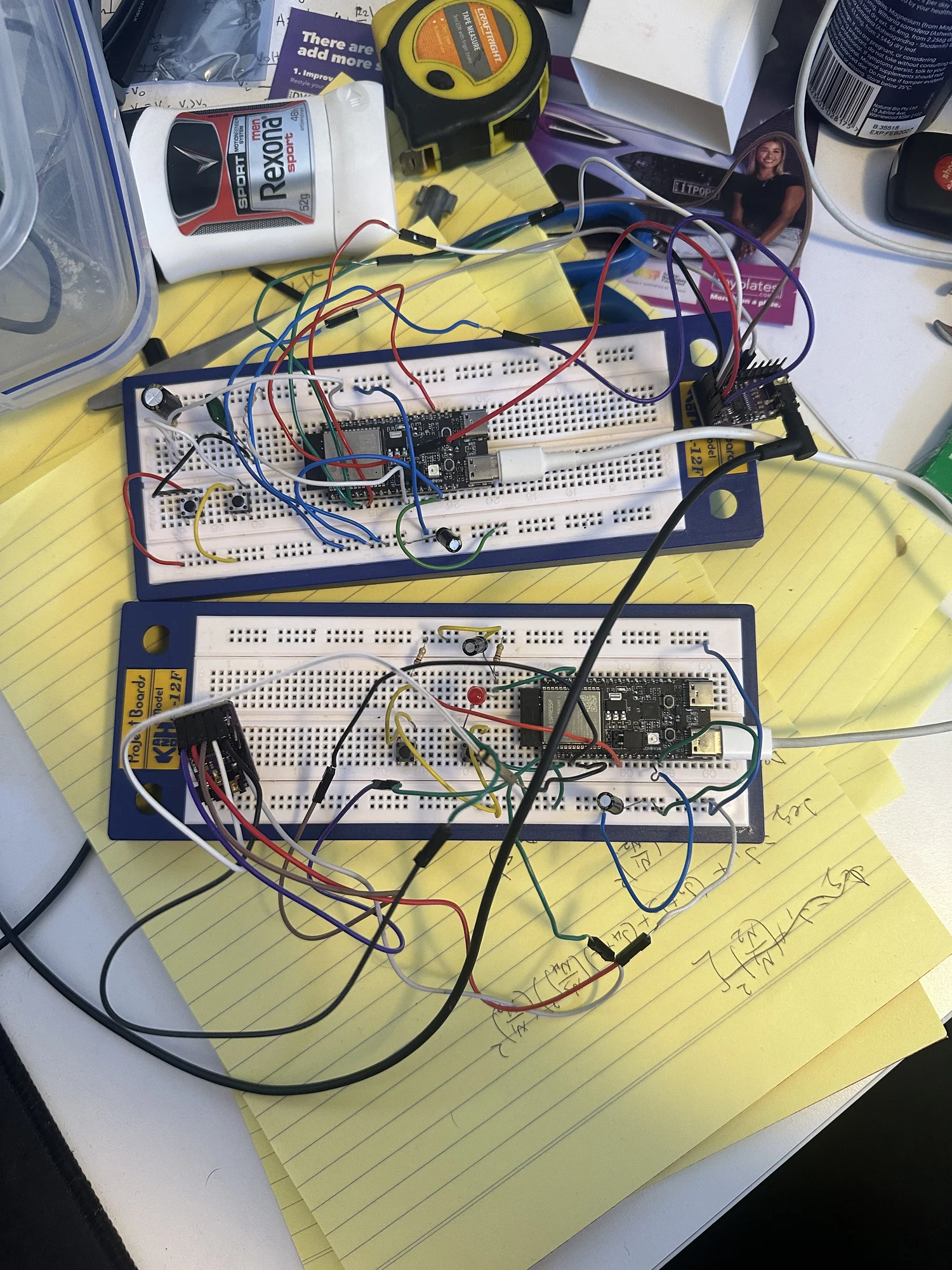
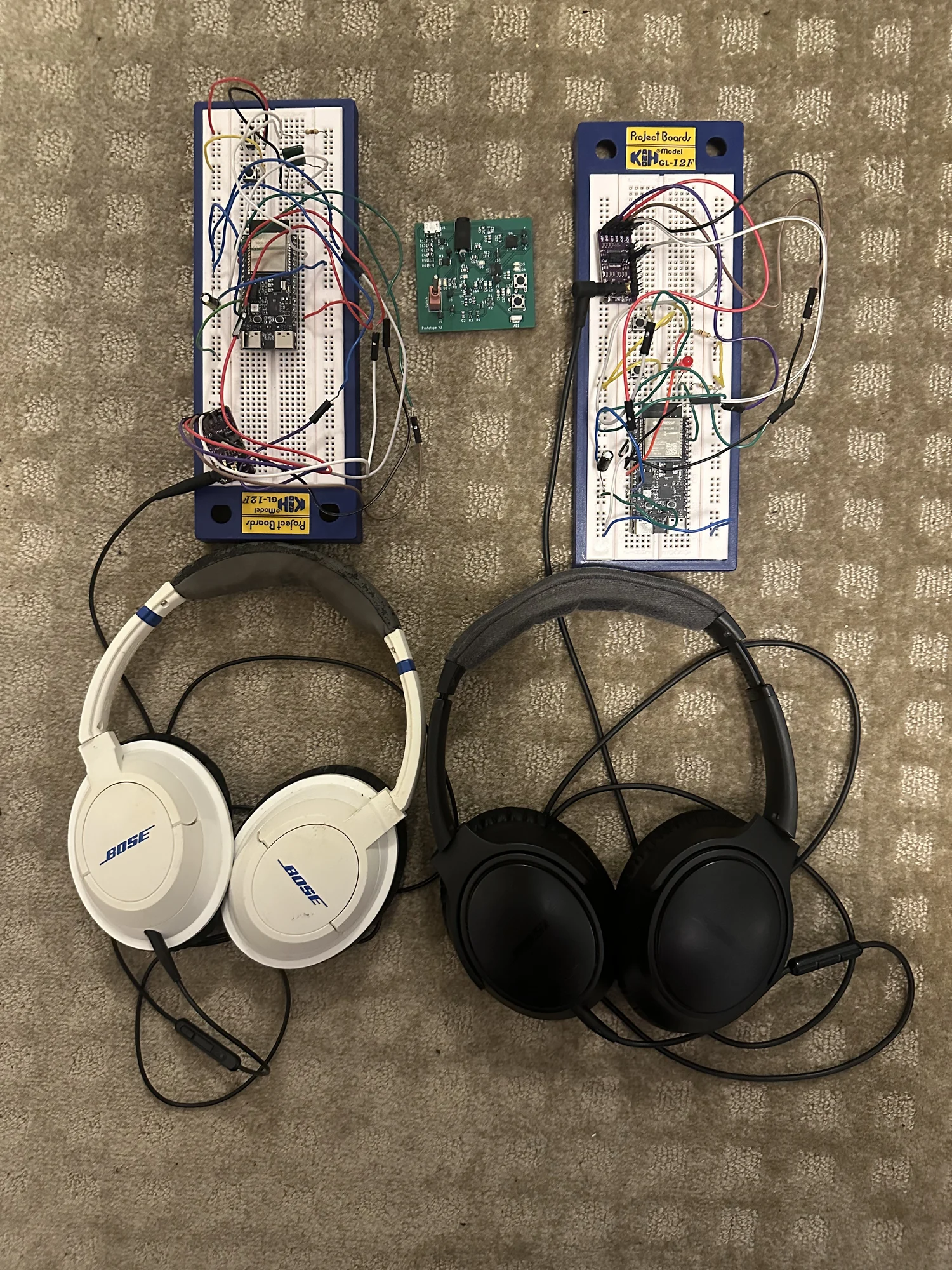
Custom-board assembly problems led to a development-board setup with ESP32-C6 hardware and a PCM5102 DAC module. This allowed the team to demonstrate the audio path independently of the unresolved board bring-up.
The documented Wi-Fi demonstration recorded a maximum delay of approximately 0.5 seconds under its tested setup. Buffer and audio-parameter changes reduced dropouts with a quality tradeoff.
Connect The Design To The Build
The image sequence covers the block diagram, schematic, PCB routing and 3D model, followed by board fabrication, soldering and development setups. It shows the hardware and integration work behind the earphone concept.
The Engineering Journey
Design
Connect battery power, wireless control, audio conversion and a custom PCB.
Prototype
Demonstrate playback and forwarding with the ESP32-C6/Wi-Fi development setup.
Evolve
Define an STM32WBA63/Bluetooth LE Audio direction for the earphone implementation.
What This Experience Achieved
The result
Demonstrated playback and audio redistribution on the ESP32-C6/Wi-Fi prototype, and identified STM32WBA63 with Bluetooth LE Audio as the intended direction for the earphone design.
Technical decisions & tools
The demonstrated stack was ESP32-C6, Wi-Fi, embedded C++, a Python audio source and I2S playback. The custom design included battery charging, buck-boost conversion, an LDO and an NAU8822-family codec.
The STM32WBA63 and Bluetooth LE Audio direction remains the next implementation to develop.